
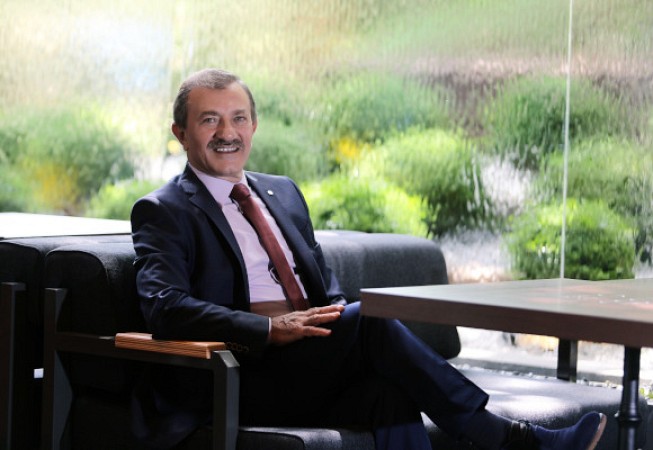
PLASFED President Ömer Karadeniz provided a comprehensive evaluation of the Turkish economy and the plastic sector regarding the first six months of 2025. He noted that high inflation and financing costs continue to exert pressure on the industry, while emphasizing that despite all difficulties, the plastic sector demonstrated its competitive strength in the global market with approximately $4.6 billion in exports during the first half of 2025. Karadeniz stated that production is indispensable for a robust economy and highlighted the importance of structural reforms and strategic investments for sustainable growth.
The President of the Plastic Industrialists Federation (PLASFED), Ömer Karadeniz, provided a comprehensive evaluation of the trends in the Turkish economy and plastic sector in the first six months of 2025. He mentioned that high inflation and financing costs continue to create pressure on the industry and that the plastic sector needs structural reforms and strategic investments for sustainable growth.
Karadeniz noted that, although growth in the Turkish economy was limited in the first half of 2025, he remarked, "Despite the weakening of domestic demand, industrial production remained resilient, particularly in sectors focused on external markets. However, the high-interest environment continues to pose a significant obstacle to industrial investments."
The sector exported $4.6 billion in the first half of the year
Karadeniz, the head of the umbrella organization PLASFED, stated that the plastic sector signed off on approximately $4.6 billion in exports during the first half of 2025, indicating the sector's competitive strength and dynamism in the global market. He pointed out that the situation is not as bright domestically, drawing attention to the challenges industrialists face in accessing financing. He emphasized that the plastic sector maintained a substantial production capacity in the first half of 2025 and highlighted its contribution to foreign trade in the Turkish economy.
"We are a sector that generates a current surplus"
Recalling that in 2024, plastic product exports were $7 billion while imports were $3.5 billion, Karadeniz stated, "The plastic sector holds a net exporter position in manufactured goods. In other words, we are generating a current surplus. This situation shows that our sector has a positive contribution to the foreign trade balance. Moreover, when considering exports realized through industries such as automotive and textiles, which intensively use plastic products but are not directly from the plastic sector, the current surplus reaches much higher levels.
However, there is also an invisible side: In the same year, we imported $11.5 billion in raw materials. This indicates a structural problem that limits the sector's growth potential. When steps are taken to reduce dependency on raw materials, the plastic sector has the potential to excel not only in exports but also in production and employment. If domestic raw material production is increased, strategic investments are supported, and the competitiveness of manufacturers is maintained, this sector will continue to be one of the pillars of the Turkish economy," he said.
"Production slowdown is deepening"
Karadeniz reminded that with the Manufacturing PMI data announced by the Istanbul Chamber of Industry dropping to 46.7 in June, the declining trend in manufacturing industry reached its 15th consecutive month. He made the following evaluation:
"Things are becoming difficult on the production front. The sharp increase in input costs, fluctuations in exchange rates, and difficulties in financing access are squeezing producers. This pressure is felt even more in sectors, such as plastic, that depend on raw materials and energy. The decrease in new orders is evident both in the domestic market and in exports."
"Cautious optimism in the second half"
Sharing his expectations for the second half of the year, Karadeniz indicated that signals of recovery in export markets are encouraging. However, he stressed the need to closely monitor uncertainties in global trade, energy costs, and fluctuations in exchange rates.
"As the plastic sector, we prioritize investments in efficiency, digitalization, and sustainability to maintain and enhance our competitiveness. This transformation process will be the most powerful tool to carry our sector into the future," he concluded.
Translated by Artificial Intelligence